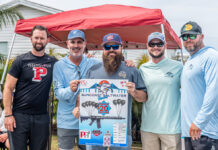

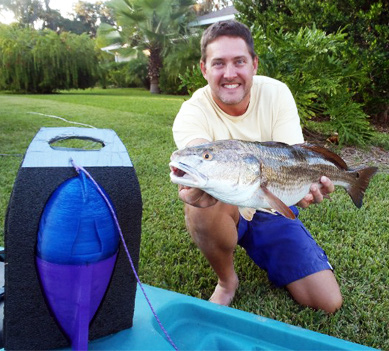
BRADENTON, Fla. – Seventeen years ago, Matthew Avery Stepped into the world of kayak fishing armed with nothing but a beat-up kayak, a $50 Walmart road-and-reel combo, and a flimsy $10 bait bucket that murdered his bait faster than a hungry pelican.
That frustrated fisherman just so happened to hold a Master of Science degree in Aeronautical and Astronautical engineering and a curiosity for experimentation. What started as a “this doesn’t really matter” side project has now turned into one of the most delightfully obsessive success stories to ever float out of a local garage.
Meet the birth of Baitshark – Matthew Avery’s mad science experiment that escape the lab and is no revolutionizing how kayak anglers keep their bait alive.
Right around the time affordable 3D printers were first hitting the market, Avery dropped $2,400 on one and began cranking out prototype after prototype. He printed roughly 50 versions before the magic moment arrived. After testing one in the pond behind his house, he marched inside and proudly declared to his wife, “I did it. I have something. “
Friends and family all raved about the new bait container, but as any true scientist knows, relatives are terrible focus groups. So Avery set himself a make-or-break challenge: sell 25 units to comlete strangers. Having some faith in his experiement, he upgraded to a massive 4-foot-tall 3D printer and started production in his garage.
Then things got gloriously out of hand.
Determined to answer every “what if” question that popped into his head, Avery dove headfirst into manufacturing experiments that would make most people’s eye glaze over. He tried polyurethane casting. He built his own rotational molding machine. He constructed a hydraulic press just to cut foam. He whipped up an aluminum-filled epoxy tool for blow molding. He bought 1,600 pounds of plastic pellets. And then – because why not – he bought a second giant 3D printer and heavily modified both so they could spit out four units a day.
“I don’t know how many thousands of dollars I spent experimenting, not to mention the time,” recalls Avery. “I nearly lost my mind during this phase of Baitshark and ended up 3D printing over 800 units.”
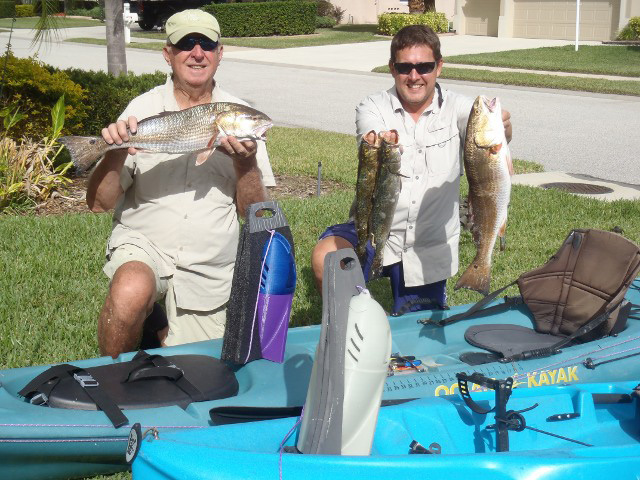
But the real quest – the one that kept him stuck in 3D printing purgatory for five long years – was bigger than just building a better bait bucket.
Avery wanted to know: Can you actually make a quality fishing product entirely in America?
The answer, he discovered, is yes…but only if you’re stubborn enough enough to move mountains (and occasionally China).
When a local injection molding company quoted him tooling and casually admitted they’d just outsource it overseas anyway, he pushed back. He waited two years for a U.S.-made tooling quote that never came. Eventually, he relented and had the tolling produced in China – but not before hiring an international law firm to draft a contract in Chinese so ironclad that if the design ever “escaped,” he’d have legal options.
Then came the treasure hunt: hours upon hours scouring the internet for American-made foam, fasteners, springs, and every single component. Even the CAD software used to design Baitshark was U.S.-made. What began as a simple “let’s see if we can do this domestically” mission ended with every single part being top-shelf quality.
Today, the Baitshark is a premium product that Matthew Avery couldn’t be prouder of – and one that kayak fisherman across the country are snapping up.
From a cheap Walmart bucket that kept killing the bait to a patented, American-sourced, garage-born success story built through sheer stubborn genius. That is what happens when an engineer with a endless supply of curiosity and a relentless passion to never quit decides to solve a problem most people would just complain about.
Manatee County might not have a space program, but we’ve clearly got at least one rocket scientist who traded the stars for saltwater – and landed a big one.