
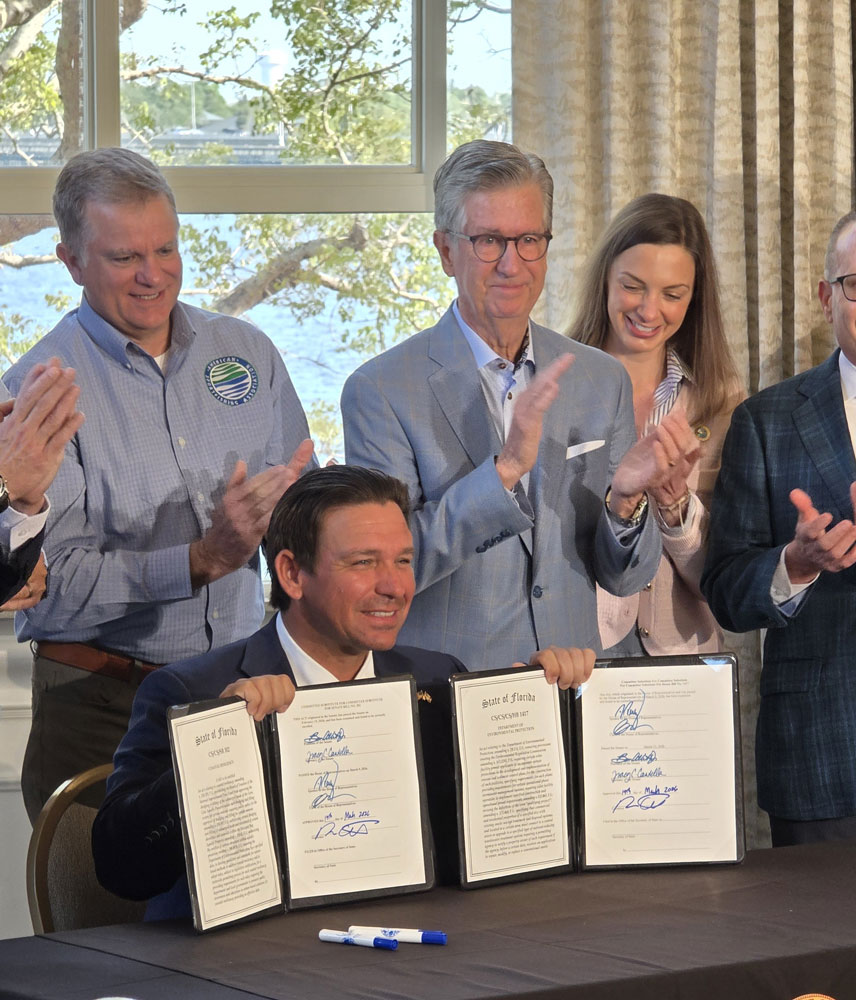
BRADENTON, Fla. — Gov. Ron DeSantis stood at Pier 22 overlooking the sparkling waters of the Manatee River last Thursday and put an emphatic end to a controversial proposal that would have brought mega-cruise ships to one of Florida’s most sensitive aquatic preserves.
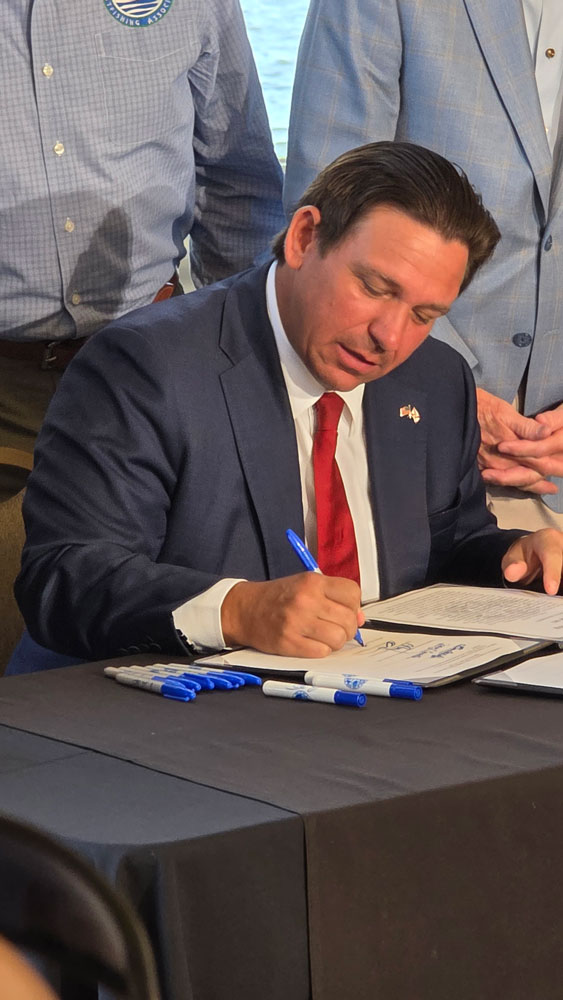
With a stroke of his pen, the governor signed Senate Bill 302 into law — the centerpiece of what opponents have dubbed the “no-cruise port bill” — effectively killing plans for a new commercial cruise terminal on the Knott-Cowen Tract and Rattlesnake Key in northwest Manatee County. He also signed House Bill 1417, a companion measure streamlining environmental rulemaking at the Department of Environmental Protection.
The March 19 ceremony, DeSantis’ first bill- signing of the 2026 legislative session, drew local lawmakers, environmental advocates and cheering residents who had fought the project for months. The bills passed both chambers of the Florida Legislature with overwhelming, bipartisan support: SB 302 cleared the Senate 38-0 and its House companion passed 109-0.
“This is not about being anti-cruise,” DeSantis told the crowd. “Florida remains an important destination for cruise expeditions. But there’s not really a need to add another port in the middle of a conserved area and an aquatic preserve — especially given that Tampa Bay is already home to three deep-water ports, including SeaPort Manatee right here in Manatee County. Construction of a new port next door, I think, struck a lot of people as unnecessary.”
The governor was blunt about the bill’s practical effect. “The bill would not allow the dredging that would be necessary to convert this into a commercial cruise ship terminal,” he said. “The dredging that will be allowed would be for passive recreational fishing, boating, water quality purposes — but not for a new commercial port in this area.”
Local Heroes: Sen. Jim Boyd and Rep. Will Robinson
The legislation’s most critical provision — the one that directly targets Terra Ceia Bay — came from Bradenton’s own Sen. Jim Boyd. Boyd authored and secured a floor amendment to SB 302 that prohibits large-scale dredging or filling in the Terra Ceia Aquatic Preserve except in narrow circumstances such as public-health improvements or basic navigation projects.
Boyd, who represents much of Manatee County, said the community spoke loudly once the cruise-terminal idea surfaced. “When the cruise terminal was started to be discussed, we said this is just something that we can’t allow in our community in that particular spot,” he told the crowd at Pier 22. “As the governor said, there’s plenty of cruise terminals around the state and the country. They’re good, and we support the cruise industry… but just not there.”
State Rep. Will Robinson stood shoulder-to- shoulder with Boyd and DeSantis. Robinson, who represents southwest Manatee, was equally direct: “I cannot think of a worse place in Florida for a mega cruise ship terminal to be than Terra Ceia,” he said. “We don’t need a cruise ship terminal out there. We love our area.”
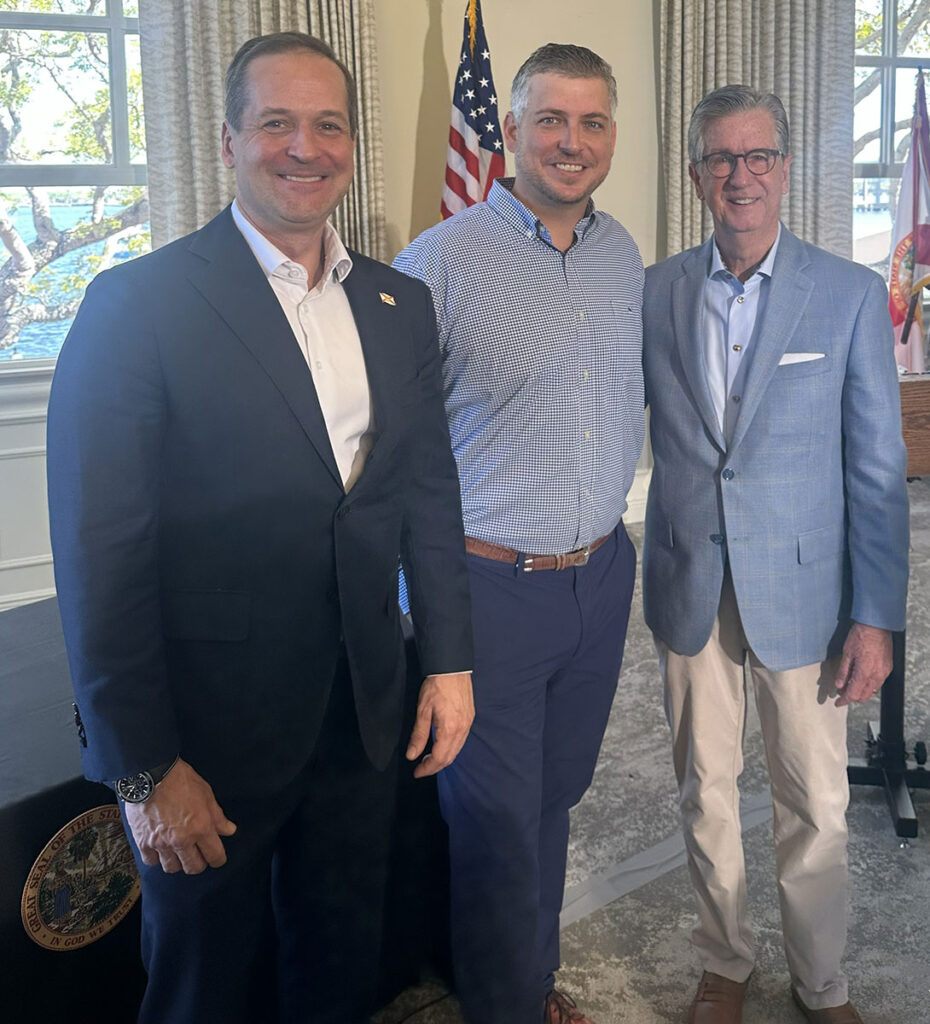
Both lawmakers joined DeSantis, DEP Secretary Alexis Lambert, Sen. Ralph Massullo, R-Lecanto, and Rep. Bill Conerly, R-Lakewood Ranch, for the signing. Their involvement turned what began as a Miami-sponsored coastal- resiliency bill into a powerful shield for Manatee County’s backyard.
How the Bills Work
Originally filed by Sen. Ileana Garcia, R-Miami, SB 302 focused on expanding protections for the Biscayne Bay Aquatic Preserve and directing the DEP to prioritize nature-based solutions — mangrove restoration, oyster-reef rebuilding and wetland rehabilitation — for coastal resilience. Boyd’s amendment expanded that mission northward, specifically naming the Terra Ceia Aquatic Preserve and closing the
door on the kind of industrial-scale dredging a cruise terminal would require. House Bill 1417, signed at the same ceremony, removes bureaucratic hurdles at the DEP by eliminating the Environmental Regulation Commission, making it easier for the state to adopt science driven environmental rules without delay. Together, the two measures form a one-two punch for coastal protection.
The Proposal That Sparked Outrage
The fight began earlier this year when cruise terminal operator SSA Marine, in partnership with Tampa’s Slip Knott LLC, floated plans for a modern cruise port on 710 acres of environmentally sensitive land along Terra Ceia Bay, adjacent to the Sunshine Skyway Bridge fishing pier and Rattlesnake Key. The site was chosen to accommodate the newest generation of mega-ships too tall to pass beneath the Skyway and reach existing Tampa Bay ports. Almost immediately, residents and environmental groups sounded the alarm. Suncoast Waterkeeper and Tampa Bay Waterkeeper warned that the project would threaten the health of Tampa Bay, Terra Ceia Bay and Sarasota Bay watersheds. An online petition gathered more than 19,000 signatures in weeks.
Opponents argued the terminal would bring noise, pollution, traffic and irreversible damage to a state-designated aquatic preserve meant to
protect seagrasses, mangroves and marine life. DeSantis echoed that concern Thursday. “I cannot think of a worse place in Florida fora mega cruise ship terminal,” he said, noting the preserve’s quiet beauty and the fact thatSeaPort Manatee already serves the region’s
commercial shipping needs. SSA Marine said in a statement after the signing that it remains “committed to working constructively” with leaders and stakeholders, insisting the project could deliver jobs and economic growth while meeting ecological
standards. But with the new law on the books, any path forward now appears legally blocked.
A Win for North River and Beyond
For readers of the North River News, the victory hits close to home. Terra Ceia Bay and the surrounding preserve are part of the same delicate ecosystem that defines life along the North River, Anna Maria Island and the broader Manatee County coast. Residents here
have long prized the area’s fishing, boating, bird-watching and unspoiled views — exactly the qualities a cruise terminal would have threatened. Environmental advocates called the signing a rare example of swift, decisive action to protect Florida’s natural treasures before
damage is done. DeSantis used the occasion to underscore a larger message: Florida can grow its economy and protect its environment at the same time. “We support the cruise industry,” he repeated, “but there’s a time and a place for that.” As the sun set over the Manatee River on Thursday, the governor’s signature became official. For Sen. Boyd, Rep. Robinson and the thousands of Manatee County residents who mobilized against the project, it was more than a bill signing. It was a promise kept — that some places are simply too special to change. The new law takes effect immediately. Plans for the Terra Ceia cruise terminal, at least for now, are dead in the water.